Our Staff & Partners

Climate justice program Coordinator
Lisette is the Climate Justice Program Coordinator. She helps to coordinate the program's efforts with a focus on administration, preparing contracts and invoices, arranging travel and workshop logistics, and coordinating culturally-appropriate meetings amongst other duties.
Lisette has come to specialize in systems analysis and communication by finding creative solutions to systemic issues and challenges. She is deeply passionate about intersectionality in climate justice and has completed courses in ethnic studies, decolonization, facilitation, and non-violent communication. She holds a B.S. in Natural Sciences with an emphasis on environmental science from the University of Alaska Anchorage. As an active community member, Lisette maintains her commitment to uplifting marginalized groups by participating in community events and facilitating a book club focused on Hispanic and Latino literature.
Lisette Dalere
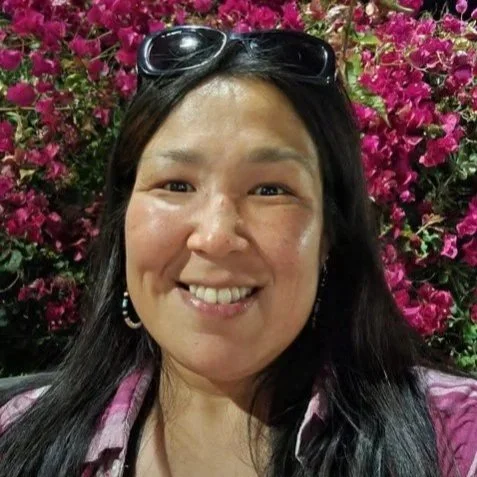
Climate justice Tribal liaison Coordinator
Jerilyn assists in forging meaningful relationships with Alaska Native communities, in advancing each communities’ climate justice goals and objectives, and in advocating for climate justice. Her work with the Tribal communities acknowledges each community’s diverse priorities and values, and elevates Alaska Native voices.
Jerilyn previously worked as an assistant Tribal Climate Resilience Liaison for the Native American Fish & Wildlife Society in partnership with the Alaska Climate Adaptation Science Center. Prior to this work she managed her Tribe’s Indian General Assistance Program (EPA). Jerilyn has been serving as the Mayor of the City of Quinhagak since 2015 and has been involved in advisory school boards in different capacities. She is a lifelong rural Alaskan.
Jerilyn Kelly
Our Partners
*
Our Partners *


-
Cody George
Permafrost Pathways Liaison
AKIACHAK NATIVE COMMUNITY
-
Maamcuk Foss
Permafrost Pathways Liaison
AKIAK NATIVE COMMUNITY
-
Reggie Tuluk
Permafrost Pathways Liaison
CHEVAK NATIVE VILLIAGE
-
[ROLE VACANT]
Permafrost Pathways Liaison
CHINIK ESKIMO COMMUNITY
-
[ROLE VACANT]
Permafrost Pathways Liaison
NATIVE VILLAGE OF KIPNUK
-
JESSIE DOCK-PAUL
Permafrost Pathways Liaison
ORGANIZED VILLAGE OF KWETHLUK
-
Julius Carl
Permafrost Pathways Liaison
NATIVE VILLAGE OF KWIGILLINGOK
-
[ROLE VACANT]
Permafrost Pathways Liaison
NATIVE VILLAGE OF KWINHAGAK
-
DARREN JOHNSON
Permafrost Pathways Liaison
NATIVE VILLAGE OF NELSON LAGOON
-
vINCENT WASSILLIE
Permafrost Pathways Liaison
NATIVE VILLAGE OF NUNAPITCHUK
-


